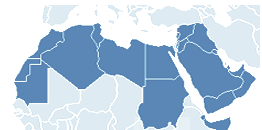
 Headlines focus on conflict and tension in the Arab world, but the rapid growth of broadband is important news that’s been under the radar. The mobile revolution is transforming the way people live and do business in the Middle East and North Africa (MENA) and that development merits attention.
The growth of broadband at about 38% annually is fueling markets, particularly the pan-Arab digital market. This sprawling market, stretching from the Atlantic to the Gulf of Oman, has a GDP of $2.85 trillion and population of 375 million, many of whom are young, Internet-savvy and connected.
Arabic is more than just the dominant language in the MENA. It helps define the cultural identity of an otherwise diverse set of countries. Despite that diversity, the overwhelming majority of the population prefers Arabic content which is in short supply, especially in some segments. Though Arabic speakers account for 5% of Internet users worldwide, only about 1% of websites are in Arabic.
Analysts contend that the sector could continue to grow at its current rate of 7 percent annually over the next few years, outperforming digital markets in every other region. At that rate, the market would be valued at $21.5 billion by 2019.
The looming question is whether the investor community, particularly foreign investors, will take notice. Access to capital has been a persistent barrier for businesses in the region and growing political risk has dampened investor enthusiasm in recent years. If the broadband revolution sparks investor interest, it could inspire much-needed confidence in the Arab world.
***
My company, South Point, supports growth-stage entrepreneurs in the region. These are my personal views and are intended to be solely for general, informational purposes and should not be construed as investment advice or a recommendation or solicitation to buy.