_________
BEFORE THE INK DRIED on the nuclear accord last month, governments and multinationals had already queued up to strike commercial deals with Iran. Within days of the P5+1 pact, German vice-chancellor Sigmar Gabriel arrived in Teheran on a junket with German business executives intent on forging ties. French, Italian and Japanese delegations announced that they were coming, too. Assuming Congress doesn’t scuttle the JCPA, Iran’s list of suitors will only grow.
Iran’s commercial appeal is obvious. The country has 80 million mostly young, typically well-educated consumers with pent-up demand in an economy worth USD $400 billion. It has the fourth-largest crude reserves and the second-largest natural gas reserves, and it will likely spend USD $140 billion to upgrade its oil and gas equipment over the next few years. And tens of billions will probably be spent to modernize “essential infrastructure” — ports roads, airports and rail.
Britain, China, India, Turkey and Saudi Arabia are expected to get the lion’s share of post-sanctions trade, while energy services companies lead the private sector players vying for near-term, big-ticket projects.
One key beneficiary is likely to be Dubai, the region’s finance and energy hub with world-class transportation and shipping facilities. Since the sanctions were imposed, Dubai has become Iran’s biggest trade partner after China, serving as Iran’s offshore gateway for both legal and black market trade.
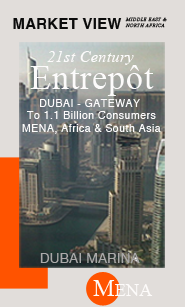 The Gulf states have traded with Iranians for centuries. The UAE is home to 400,000 Iranians — a quarter of the population — and as many as 10,000 Iranian businesses, mostly in Dubai. The city’s deep social and cultural ties, convenient transit routes and business-friendly climate give Dubai a decisive edge for organizations seeking a regional base of operations.
Dubai could become an entrepôt for Iran, the way that Hong Kong and Singapore were for China after Deng Xiaoping opened the PRC for business. Both cities’ wealth grew as China-bound banks and institutions arrived, and both became and have remained financial centers.
If Dubai plays a similar intermediating role, it could get a sizable bounce at a time of declining energy-sector revenues. The IMF estimates that it could gain USD $13 billion over the next few years, fueling three percent annual growth.
As the world awaits review of the nuclear deal by Congress, the players are plotting their trajectories to Iranian markets. For many multinational companies, that will involve setting up shop in Dubai. ?
__________
- .
-
END NOTES for CONTEXT
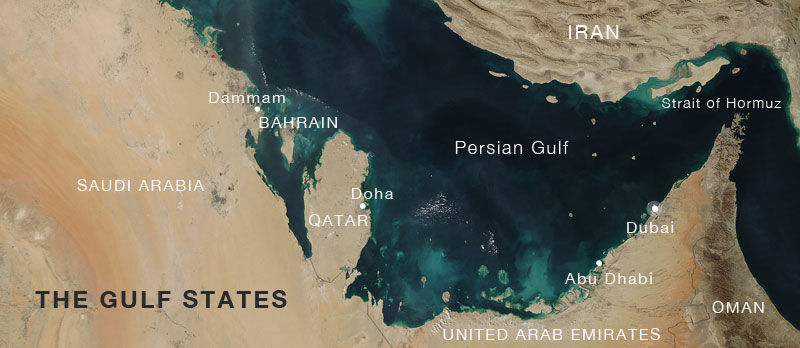
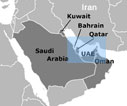 The blue section corresponds with the satellite map above (courtesy NASA). ‘Gulf states’ refers to Bahrain, Iraq, Kuwait, Oman, Saudi Arabia and the UAE, comprising the Gulf Cooperation Council (GCC). (Kuwait is not shown on the satellite map.)
 - .
- .
- Related reading:
- Overview of the Iran nuclear deal in a prior post.
- “The economic ties between Dubai and Iran are a vital means by which Dubai’s capitalist fervor, liberal outlook, and openness to the world are being fostered in Iran.” – Vali Nasr, Forces of Fortune.
- A forthcoming (8/31/15) book, Iran’s Political Economy, by Suzanne Maloney, described here.
- Iranian economy:
- Population:
- 77.1 million
- GDP (PPP):
- $945.5 billion
- -1.7% growth
- 1.0% 5-year compound annual growth
- $12,264 per capita
- Unemployment:
- 13.2%
- Inflation (CPI):
- 35.2%
- FDI Inflow:
- $3.0 billion